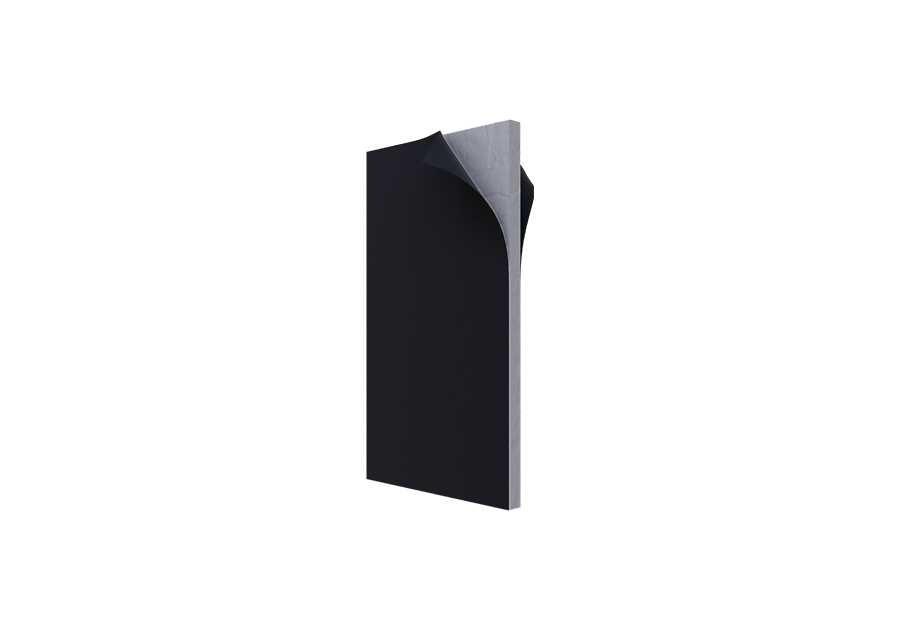
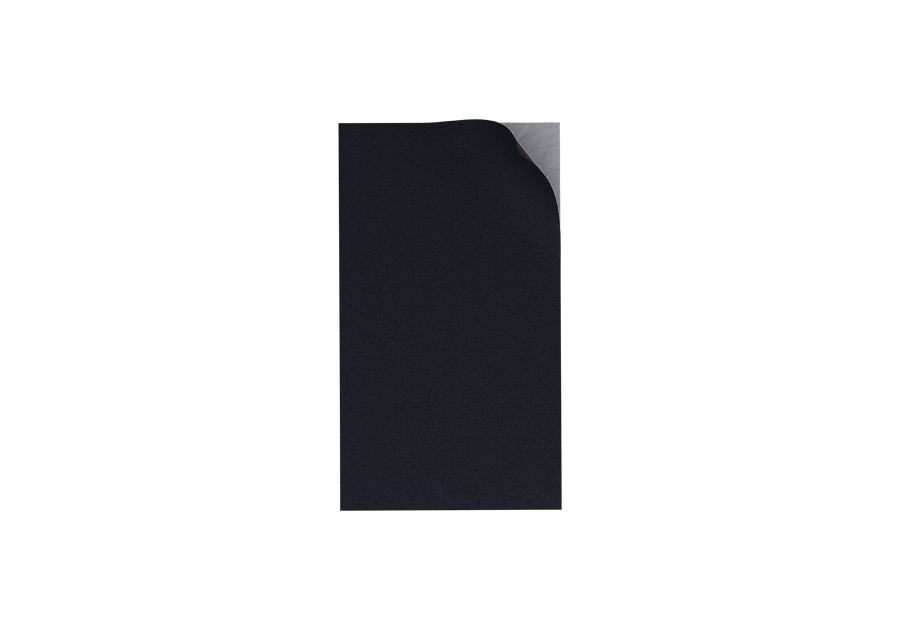
ThermaGard Slab are rigid thermal insulation boards with Stoneglass or Cart 90 facings on both sides and a High Index polyisocyanurate (PIR) foam core. They can be used as insulation in horizontal and vertical building elements, externally and internally, across all building types.
ThermaGard Slab
Key benefits
- excellent thermal insulation performance, U-value
- very good compressive strength
- CFC and HCFC free
Manufactured with
- effective width 1,150 mm
- nominal thickness from 30 mm to 100 mm
- bespoke lengths from 2 m to 8 m, depending on project requirements
Description
Technical specifications
Nominal thickness (mm)
Weight – W 1,150 mm (kg/running m)
Thermal transmittance U & RD (m²·K/W)
Nominal thickness (mm)
30
Weight – W 1,150 mm (kg/running m)
1,40
Thermal transmittance U & RD (m²·K/W)
(0,76) 1,30Nominal thickness (mm)
50
Weight – W 1,150 mm (kg/running m)
2,30
Thermal transmittance U & RD (m²·K/W)
(0,46) 2,15Nominal thickness (mm)
80
Weight – W 1,150 mm (kg/running m)
3,70
Thermal transmittance U & RD (m²·K/W)
(0,29) 3,45Nominal thickness (mm)
100
Weight – W 1,150 mm (kg/running m)
4,60
Thermal transmittance U & RD (m²·K/W)
(0,23) 4,35*Foam weight and thermal performance were calculated taking into account:
Core density 40 kg/m³
Thermal conductivity 0.023 W/m·K
Nominal board thickness
(Standards EN 13165, EN 12667 and EN 12939)
- Stoneglass facing (EN 11925)
Colour: White
Class: E (fire performance)
Waterproof with additives that protect against mould and algae
Suitable for most types of render systems
Rough surface that improves adhesion
- Cart 90 facing
Colour: Black
Bituminous for additional waterproofing
Waterproof with additives that protect against mould and algae
Ribbed surface for anti-slip protection and improved adhesion
Lightweight and resistant to mechanical stress and low temperatures
- Fibre-glass-reinforced polyester resin sheet
Nominal thickness: from 0.40 mm to 0.50 mm
Roll width: 1,010 mm
Surface resistant to chemical and bacterial agents
Surface resistant to UV radiation
Resistant to contact with urea and ammonia
Reaction to fire: F-s2-d0
Colour: Opal White
High Index Polyisocyanurate Foam Core (PIR)
Category: B-s1,d0 (EN 13501-1)
It is self-extinguishing, does not contribute to fire spread, is difficult to ignite, produces little to no smoke, and does not produce flaming droplets or particles during combustion.
Density: 38 to 42 kg/m³
Its mechanical strength makes it ideal for structural building materials, as it can withstand external pressures and building loads. Despite its high density, it remains lightweight, which facilitates panel installation.
Thermal conductivity (λ): 0.021 to 0.023 W/mK
Its low thermal conductivity provides excellent thermal insulation, reducing heat loss and contributing to the energy efficiency of buildings.
Closed-cell structure: 95%
The high proportion of closed cells ensures low moisture absorption and enhanced resistance to corrosion and wear, making it ideal for humid environments or areas exposed to severe weather conditions.
Sound insulation: Due to its density, it also offers good acoustic insulation performance.
Durability: Service life of 30 years
Environmental friendliness: CFC and HCFC free
It does not contain substances hazardous to health and is manufactured using materials that comply with environmental standards.
Available Options
Connection / fixing options
DETAILS
CLOSE
These boards are not load-bearing or self-supporting structural elements, but fully supported insulation elements. They do not carry loads and cannot resist loads (bending, shear). Although their compressive strength under a uniformly distributed load reaches 150 kN/m², their bending strength does not exceed 15 kN/m².
They are fixed to the load-bearing elements either with adhesive (glue) or with anchors (plastic or metal).
In all cases, at the joint between boards, the use of a sealing material is recommended (typically low-expansion polyurethane foam) to seal the construction.
Applications
DETAILS
CLOSE
They are used for energy upgrades to buildings, contributing substantially to energy savings.
They reduce heat losses and help cut CO₂ emissions, improving the environmental performance of the building envelope.
One of their key applications is floor insulation for cold rooms, where stable thermal performance and high compressive strength are required.